GE Christenson ~ The Power And Greed Pyramid

Deviant Investor | December 31 2012

pyramid

Outrageous HSBC Settlement Proves the Drug War is a Joke” says Matt Taibbi of the Rolling Stone. He leads with “If you’ve ever been arrested on a drug charge, if you’ve ever spent even a day in jail for having a stem of marijuana in your pocket or “drug paraphernalia” in your gym bag, Assistant Attorney General and longtime Bill Clinton pal Lanny Breuer has a message for you: Bite me.” Taibbi is refreshingly direct. Please read his article.

The settlement shows, in my opinion:

  • The excuse was “Criminal prosecution might topple the bank and endanger the financial system.” If that is true (doubtful) in what condition is our financial system, even after $Trillions of bailouts? If it is not true, what does that say about the “rule of law” and corruption at the top?
  • Laundering $Billions in drug money is a criminal offense, but not prosecutable, if done by politically connected bankers.
  • If bankers are not prosecuted for “vast and prolonged” money laundering and aiding “terrorism” then we have a clear confirmation that “too big to fail” (TBTF) banks are higher up the power pyramid than government officials.
  • Supposedly the war on drugs is important. We have spent $Billions and put millions in jail to discourage drug use (How is that working for us?) so it must be important. But apparently it is actually not important if a TBTF bank is laundering $Billions in drug money each year (month?).
  • Supposedly the war on terrorism is important. We have spent $Trillions and killed many people to fight “terrorism” (How is that working for us?) so it must be important. But apparently it is not important if a TBTF bank is assisting the illegal transfer of $Billions to terrorist organizations.

Continue reading

Matt Taibbi ~ Another Goldman Creature Given Vital Government Post

Reader Supported News | December 7 2012

Big news yesterday in the United Kingdom, where the citizenry surveyed its domestic banking system and discovered that it couldn’t find a single person trustworthy enough to put in the top job at the Bank of England. So they went to Canada and stole that country’s central banker, Mark Carney, who just happens to be a former Goldman, Sachs executive – he was once Goldman’s managing director of investment banking.

Carney’s appointment may be seen as an admission that the British banking sector is now so tainted, only an outsider can be trusted to govern them. Almost all of the major English banks have been dinged by ugly scandals. The LIBOR mess, in which banks have been caught messing around with global interest rates for a variety of sordid reasons, has most infamously implicated Barclays, but the Royal Bank of Scotland isalso a cooperator in those investigations.

Meanwhile, HSBC has been accused of laundering billions of dollars of Mexican drug money, a monstrous mess that recalls the infamous Bank of New York scandal of the late Nineties involving Russian mob money; officials have described the HSBC culture as “pervasively polluted.” And the British bank Standard Chartered is now being forced to pay $330 million to settle claims that it laundered hundreds of billions of dollars on behalf of Iran.

Continue reading

Matt Taibbi ~ B of A CEO Apparently Can’t Remember Anything

Reader Supported News | November 28 2012

Thank God for Bank of America CEO Brian Moynihan. If you’re a court junkie, or have the misfortune (as some of us poor reporters do) of being forced professionally to spend a lot of time reading legal documents, the just-released Moynihan deposition in MBIA v. Bank of America, Countrywide, and a Buttload of Other Shameless Mortgage Fraudsters will go down as one of the great Nixonian-stonewalling efforts ever, and one of the more entertaining reads of the year.

In this long-awaited interrogation – Bank of America has been fighting to keep Moynihan from being deposed in this case for some time - Moynihan does a full Star Trek special, boldly going where no deponent has ever gone before, breaking out the “I don’t recall” line more often and perhaps more ridiculously than was previously thought possible. Moynihan seems to remember his own name, and perhaps his current job title, but beyond that, he’ll have to get back to you.

The MBIA v. Bank of America case is one of the bigger and weightier lawsuits hovering over the financial world. Prior to the crash, MBIA was, along with a company called Ambac, one of the two largest and most reputable names in what’s called the “monoline” insurance business.

The monolines sell a kind of investment insurance – if you invest in a municipal bond or in mortgage-backed securities backed or “wrapped” by a monoline, you have backing in case the investment goes south. If a municipality defaults on its bond payments, or homeowners in a mortgage-backed security default on their mortgage payments, the investors in those instruments can collect from the monoline insurer.

Continue reading

Bill Moyers Interviews Matt Taibbi Re Manipulations Of The Privileged 1% [Video]

Reader Supported News | October 21 2012

The One Percent is not only increasing their share of wealth – they’re using it to spread millions among political candidates who serve their interests. Example: Goldman Sachs, which gave more money than any other major American corporation to Barack Obama in 2008, is switching alliances this year; their employees have given $900,000 both to Mitt Romney’s campaign and to the pro-Romney super PAC Restore Our Future. Why? Because, says the Wall Street Journal, the Goldman Sachs gang felt betrayed by President Obama’s modest attempts at financial reform.

To discuss how the super-rich have willfully confused their self-interest with America’s interest, Bill is joined by Rolling Stone magazine’s Matt Taibbi, who regularly shines his spotlight on scandals involving big business and government, and journalist Chrystia Freeland, author of the new book Plutocrats: The Rise of the New Global Super-Rich and the Fall of Everyone Else.

“We have this community of rich people who genuinely believe that they are the wealth creators and they should get every advantage and break,” Taibbi tells Bill. “Whereas everybody else is a parasite and they’re living off of them.”

Freeland adds, “You know, 2008 is not so long ago, and already, the anti-regulation chorus is so strong. How dare they have the gall to actually argue that too much regulation of American financial services is what is killing the economy?”

Enhanced by Zemanta

Matt Taibbi ~ Mitt Romney Wins All-Important BS Contest

Reader Supported News | October 6 2012

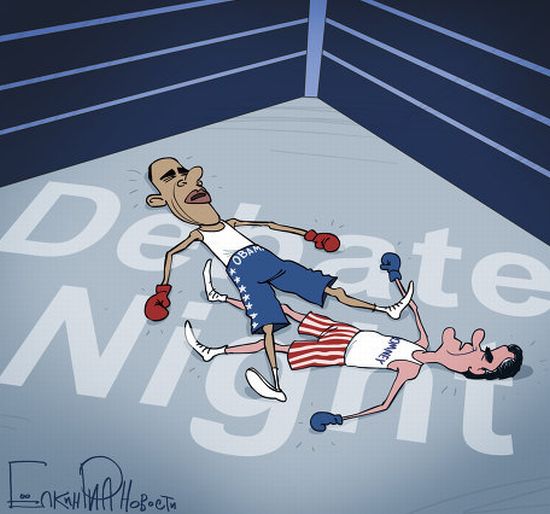
OPINION ~ I didn’t watch the debate – I just couldn’t. I read it in transcript form afterwards. I know it is widely believed that Mitt Romney won, but I don’t agree. I think both candidates lost. I think they both sucked. Romney told a series of outright lies - the bit about the pre-existing conditions was incredible – while Barack Obama seemed unaccountably disinterested in the intellectual challenge of the exercise, repeatedly leaving the gross absurdities hurled his way by Romney unchallenged.

Romney’s performance was better than Obama’s, but only if you throw out criteria like “wasn’t 100% full of shit from the opening bell” and “made an actual attempt to explain who he is and what his plans are.” Unfortunately, that is good enough for our news media, which drools over the gamesmanship aspects of these debates, because it loves candidates who sink their teeth into the horse-race nonsense that they think validates their professional lives.

For instance: in my local paper, the Star-Ledger in New Jersey, I read an analysis entitled, “Romney’s debate performance was presidential game changer, analysts say.”

The unnamed authors of this analysis delivered a blizzard of sports metaphors about Romney’s performance. “It’s a new race for the White House,” they said, after Romney “changed the game with an aggressive, confident performance” – needed, because “Obama’s forces had hinted earlier that all they needed from the debate was one good punch to knock Romney out,” after the challenger “spent the summer and early fall stumbling.”

On the internet, they complemented this keen analysis with a cartoon picture of the two candidates as superheroes punching each other, complete with “Pow!” and “Bam!” Batman-style effects.

Why was Romney so effective, according to the Star-Ledger? Because “the Romney viewers saw during the nationally televised debate from Denver was the one his friends have long known: a conversational, smart, decent-on-his-feet guy, eager to defend his plans to cut taxes and change government health insurance for future generations.”

Obama, meanwhile, came off as “wonky and lacking punch,” because he was “so intent on answering questions.”

Continue reading

Matt Taibbi ~ How Wall Street’s Rolling Back Financial Reform

RS_News | September 20 2012

OPINION ~ Wall Street lobbyists are awesome. I’m beginning to develop a begrudging respect not just for their body of work as a whole, but also for their sense of humor. They always go right to the edge of outrageous, and then wittily take one baby-step beyond it. And they did so again last night, with the passage of a new House bill (HR 2827), which rolls back a portion of Dodd-Frank designed to protect cities and towns from the next Jefferson County disaster.

Jefferson County, Alabama was the most famous case - the city of Birmingham went bankrupt after being bribed and goaded into taking on billions of dollars of toxic swap deals – but in fact it was just one of hundreds of similar examples of localities being duped into suicidal financial deals by rapacious banks and financial companies. The Denver school system, for instance, got clobbered when it opted for an exotic swap deal pushed by J.P. Morgan Chase (the same villain in Jefferson County, incidentally) and then-school superintendent/future U.S. Senator Michael Bennet, that ended up costing the school system tens of millions of dollars. As was the case in Jefferson County, the only way out of the deal involved a massive termination fee that might have been even more destructive than the deal itself.

To deal with this problem, the Dodd-Frank Act among other things included a simple reform. It required the financial advisors of municipalities to do two things: register with the SEC, and accept a fiduciary duty to respect the best interests of the taxpayers they are advising.

Sounds simple, right? But Wall Street couldn’t have that. After all, if companies are required to have a fiduciary responsibility to cities and towns, how in the world can they screw cities and towns? The idea was a veritable axe-blow to the banks’ municipal advisory businesses.

Continue reading

Matt Taibbi ~ Why the Government Won’t Fight Wall Street

RS_News | September 19 2012

The great mystery story in American politics these days is why, over the course of two presidential administrations (one from each party), there’s been no serious federal criminal investigation of Wall Street during a period of what appears to be epic corruption. People on the outside have speculated and come up with dozens of possible reasons, some plausible, some tending toward the conspiratorial – but there have been very few who’ve come at the issue from the inside.

We get one of those rare inside accounts in The Payoff: Why Wall Street Always Wins, a new book by Jeff Connaughton, the former aide to Senators Ted Kaufman and Joe Biden. Jeff is well known to reporters like me; during a period when most government officials double-talked or downplayed the Wall Street corruption problem, Jeff was one of the few voices on the Hill who always talked about the subject with appropriate alarm. He shared this quality with his boss Kaufman, the Delaware Senator who took over Biden’s seat and instantly became an irritating (to Wall Street) political force by announcing he wasn’t going to run for re-election. “I later learned from reporters that Wall Street was frustrated that they couldn’t find a way to harness Ted or pull in his reins,” Jeff writes. “There was no obvious way to pressure Ted because he wasn’t running for re-election.”

Kaufman for some time was a go-to guy in the Senate for reform activists and reporters who wanted to find out what was really going on with corruption issues. He was a leader in a number of areas, attempting to push through (often simple) fixes to issues like high-frequency trading (his advocacy here looked prescient after the “flash crash” of 2010), naked short-selling, and, perhaps most importantly, the Too-Big-To-Fail issue. What’s fascinating about Connaughton’s book is that we now get to hear a behind-the-scenes account of who exactly was knocking down simple reform ideas, how they were knocked down, and in some cases we even find out why good ideas were rejected, although some element of mystery certainly remains here.

Continue reading

Matt Taibbi w/ Amy Goodwin ~ Romney’s Secret? Greed, Debt and Forcing Others to Foot the Bill

RS_News | September 3 2012

Listen to video here

RS_Editors ~ A new article by reporter Matt Taibbi in Rolling Stone sheds new light on the origin of Republican presidential candidate Mitt Romney’s fortune, revealing how Romney’s former firm, Bain Capital, used private equity to raise money to conduct corporate raids. Taibbi writes: “What most voters don’t know is the way Mitt Romney actually made his fortune: by borrowing vast sums of money that other people were forced to pay back. This is the plain, stark reality that has somehow eluded America’s top political journalists for two consecutive presidential campaigns: Mitt Romney is one of the greatest and most irresponsible debt creators of all time. In the past few decades, in fact, Romney has piled more debt onto more unsuspecting companies, written more gigantic checks that other people have to cover, than perhaps all but a handful of people on planet Earth.”

AMY GOODMAN: This is Democracy Now!, democracynow.org. We are broadcasting from PBS station WEDU in Tampa, Florida. This is “Breaking With Convention: War, Peace and the Presidency,” Democracy Now!’s special coverage from the RepublicanNational Convention, inside and out. I’m Amy Goodman.

We continue our coverage now by turning to an issue that’s been raised repeatedly during the campaign: the personal wealth of Republican presidential nominee Mitt Romney. A new article by reporter Matt Taibbi in Rolling Stone sheds light on the origin of his fortune, revealing how Romney’s former firm, Bain Capital, used private equity to raise money to conduct corporate raids. Matt Taibbi writes, quote, “what most voters don’t know is the way Mitt Romney actually made his fortune: by borrowing vast sums of money that other people were forced to pay back. This is the plain, stark reality that has somehow eluded America’s top political journalists for two consecutive presidential campaigns: Mitt Romney is one of the greatest and most irresponsible debt creators of all time,” Taibbi writes. He goes on to say, “In the past few decades, in fact, Romney has piled more debt onto more unsuspecting companies, written more gigantic checks that other people have to cover, than perhaps all but a handful of people on [planet] Earth.”

Well, Matt Taibbi joins us now, contributing editor for Rolling Stone magazine. His most recent in-depth piece called “Greed and Debt: The True Story of Mitt Romney and Bain Capital,” author of the book also, “Griftopia: A Story of Bankers, Politicians, and the Most Audacious Power Grab in American History.”

Matt Taibbi, welcome to Democracy Now!

MATT TAIBBI: Good morning.

AMY GOODMAN: Lay it out for us. Excellent piece, investigative piece, on Mitt Romney’s wealth. Where did it start?

MATT TAIBBI: Well, you know, for me, it started when I had to cover this campaign earlier this year, and I was listening to Romney’s stump speech about debt. You know, he came up with this whole image of a prairie fire of debt raging across America that was literally going to burn children alive in the future. And I kept thinking to myself, does nobody know what this guy did for a living and how he made his money? You know, Mitt Romney is unabashedly a leverage buyout artist. And a leverage buyout artist is a guy who borrows lots of money that other companies have to pay back. And that’s the simple formula.

Continue reading

Eric Sundermann ~ Matt Taibbi: On Hunter Thompson And Why Barack Obama Isn’t A Great Shark

Village Voice | RS_News | June 27 2012

OPINION ~ Matt Taibbi, like many journalists, grew up idolizing Hunter S. Thompson. But Taibbi, unlike many journalists, got Hunter S. Thompson’s job.

The similarities between the two Rolling Stone scribes do not stop there, even though Taibbi himself argues he’s nothing like Thompson. Both made their name pointing out hypocrisies and flaws in the U.S. government. Both thrived (one still is) at a time of turmoil in our country’s history. Both even managed to love the same sport, the game of football. And now both have their name on the cover of the same book. Taibbi was given the responsibility of writing a new introduction to the 40th-anniversary edition of one of Thompson’s seminal works, Fear and Loathing on the Campaign Trail ’72, which releases today.

In his introduction, Taibbi highlights the importance of Thompson’s writing, calling him the “most instantly trustworthy” American narrator since Mark Twain, and argues that the book still continues to define the way we think about the dramas of politics. Taibbi stopped by The Village Voice office (where he was a summer intern in 1987) to chat about Thompson’s influence, how Thompson lives up to his own cliche, and why Obama would disappoint Thompson, were Thompson still alive.

When did you first read Fear and Loathing on the Campaign Trail ’72?

I remember my father [Emmy-winning journalist Mike Taibbi] telling me about when Thompson was writing the pieces in Rolling Stone at the time–not the book, but the monthly dispatches. It was such a unique thing because everybody was waiting for it at the end of every month. I didn’t read the book till I was pretty old. I read Fear and Loathing in Las Vegaswhen I was in high school, and I probably read this when I was a senior in college.

Did you ever meet him?

No, but I talked to him on the phone once. That was close as I came. I was going to be hired by a publishing company to edit a compilation of gonzo journalism, and I was really broke at the time. So I sat down to really think about this project, and the more I thought about it, the more I realized that gonzo journalism just means Hunter Thompson. There aren’t other examples of gonzo journalism. I tried to put something together, but then I called Thompson up and basically explained the dilemma: “I got stuck with this assignment, and what do you think of it, because if you’re not into it, I’m probably not into it.” And he goes [adopting a deep, gravelly voice], “That’s a shitty assignment. How badly do you need the money?” And I said, “Pretty badly.” And he said, “Well, I don’t envy you.” And that’s how he left it, so I decided not to do it.

Continue reading

Matt Taibbi ~ Jobs Act Fallout: More Fraud

Rolling Stone | RS_News | June 8 2012

OPINION ~ I’m on vacation, very far from home, so apologies for the short post. I’ll be back online next week, and we have a fun story coming out in Rolling Stone the week after that.

In the meantime, I wanted first of all to thank everyone who participated in the Thunderclap Twitter experiment. I’m away, and haven’t heard the full report yet, but I understand it was a rousing success. I’ll find out more when I come home, but until then, thank you all again for taking the time to sign up.

One story I did want to pass on while I was gone is a very interesting Wall Street Journal piece entitled, “Meet the JOBS Act’s Jobs-Free Companies.” A few months ago, I wrote a few articles about the JOBS Act, which a number of friends of mine from congress and from the regulatory community insisted would pave the way for a return to the IPO fraud boom of the late nineties, if not for a return to the penny-stock fraud age.

Well, eight weeks after the passage of the law, we’re finding some unexpected results. Among the more controversial provisions of the JOBS Act, remember, was a sort of blanket regulatory exemption for so-called “Emerging Growth Companies,” which were loosely defined as public companies with less than $1 billion in annual revenues. Among other things, the new law allows such companies to avoid independent accounting requirements for the first five years of their existence.

According to the WSJ, what’s happening now is that the JOBS Act is being used to facilitate what are known as “reverse mergers.” Because it’s traditionally been difficult for new companies to meet the regulatory requirements for going public, what’s often happened is that young companies look for dormant or dead corporations that are already registered. They then merge with those “empty shell” companies, use their corporate structures, and thusly avoid the IPO process altogether. This process is called a “reverse merger.”

Continue reading

Matt Taibbi ~ The Facebook IPO Clusterf**k

Rolling Stone | RS_News | May 24 2012

OPINION ~ A suit has been filed by Facebook shareholders against Mark Zuckerberg, Facebook, Morgan Stanley and others. It’s based on a very simple concept: when internal analysts learned that Facebook’s numbers were going to be worse than expected, the company and its bankers didn’t tell everyone, but just “selectively disclosed” information to a small group of “preferred investors.”

Henry Blodget, who unfortunately should know about these things, gave a good summary of it all on CBS This Morning:

I was on the phone last night with a former hedge fund CEO who was talking about this. “Facebook,” he said, “is a colossal example of a complete clusterf**k where everybody wins except the ordinary investor.”

His point was that virtually every week now we see stories like this that hint at a kind of two-tiered market system – in which most of the real action takes place inside an unregulated black-box network of connected insiders who don’t disclose their relationships or their interests, while everyone else, i.e. the regular suckers, live in the more tightly-policed world of prospectuses and quarterly reporting and so on.

Continue reading

Matt Taibbi ~ Austerity Can’t Be Just for Regular People

Rolling Stone | Reader Supported News | May 9 2012

OPINION ~ It didn’t take long to crank up the backlash against European voters. This is inevitable whenever a socialist wins a major election, but particularly now, when new French president François Hollande rode to victory shouting, “Austerity can no longer be inevitable!”

This sounds like the beginning of what will be a very heated debate over who has to pay for the excesses of the financial crisis. It was previously assumed that everybody but the actual financial services sector would have to pay, but voters in Europe now are refusing to go along, sparking a wave of eye-rolling editorials in the financial press. Even David Brooks got into the act today, penning a lugubrious editorial about the errant political instincts of the populist masses here and abroad.

Markets all over the world freaked out over the prospect of having ignorant European voters meddling in the recovery process the geniuses of the high finance world had already painstakingly laid out for them. The model for economic progress in the financial bubble era, after all, is supposed to go something like this:

  1. Let banks inflate massive asset bubbles with the aid of cheap or even free government cash, and tons of leverage;
  2. Before it all explodes, carve out gigantic sums for bonuses and compensation for the companies that inflated those bubbles;
  3. After it explodes, get the various governments to bail those companies out;
  4. Pay for it all by slashing services to what’s left of the middle class.

This is the model we used in America. We had a monster asset bubble based on phony mortgages, which Wall Street was allowed to inflate to spectacular dimensions with minimal reserve capital, huge amounts of leverage, and tons of fraud for good measure. When that bubble exploded, we first rescued the banks who inflated the thing in the first place, and then our plan for paying for it mostly revolved around folks like Paul Ryan and Chris Christie, who made great political hay by trying to take an ax to “entitlements” like health care and retirement benefits.

They’re replaying the same script in Europe, sort of. The causes of crises in places like Spain, Greece, Portugal and Italy vary somewhat and are less simple to define, but a common denominator in all of them is weak growth mixed with giant budget deficits.

In most all of these cases, you had enormous sums of money entering these countries in the middle and late 2000s as global financiers in the midst of the bubble boom looked for higher-yield investments around the world – Spanish real estate, Greek debt, etc.

Continue reading