
Unlike “Social Justice Warriors” Parks actually fought for something worthwhile.
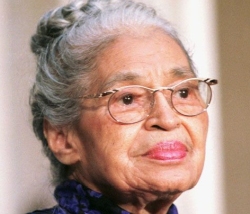 Timeline – In Montgomery, the first ten seats of every bus were reserved for white patrons, regardless of whether or not they were being used. It was common to see blacks standing over the empty seats. On December 1, 1955, Rosa Parks and three other black passengers were asked to move from their seats which were behind the white section in order to allow a white man to be seated.
The three others conceded after being threatened. However, Ms. Parks continued to refuse and was arrested, jailed, booked, fingerprinted and fined. Three friends of Rosa Parks arrived at jail to post her bond: a white liberal lawyer, Clifford Durr; his wife, a white civil rights activist who employed Rosa as a seamstress; and E.D. Nixon, the former Vice President of the NAACP’s state and local branches for whom Rosa worked as a secretary. Continue reading