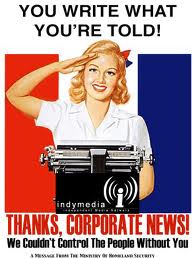
The Case for Defamation Reform: End the Sullivan Shield

Media Misinformation Undermines Our Democracy: The Case For Defamation Law Reform

Media Misinformation Undermines Our Democracy: The Case For Defamation Law ReformAlexander Muse – Have you ever wondered why the media seems to feel so emboldened when broadcasting unfounded claims about public figures like Donald Trump, as if they’re shielded from any consequence?

The answer lies in a questionable Supreme Court decision from 1964—NY Times v. Sullivan—which established a novel and radical interpretation of the First Amendment that has, for six decades, let media outlets slander public figures with impunity.

The Constitution guarantees freedom of speech, yes, but nowhere in its text does it explicitly allow the press to defame individuals without consequence. Yet in 1964, in a 9-0 decision authored by Justice William Brennan, a Supreme Court dominated by activist judges established a precedent without clear constitutional grounding, declaring that public figures could only succeed in defamation suits if they could prove “actual malice”—that is, that the media knowingly lied or acted with reckless disregard for the truth.

The justices defined this standard of “actual malice” in a way that makes it exceedingly difficult for any public figure to win a defamation case. The lawyer who proposed the standard, Herbert Wechsler, argued on behalf of The New York Times, and his arguments were pivotal in the Court’s adoption of this stringent requirement.

They created an almost impossible bar to clear for proving harm. The ruling has allowed media organizations—whose biases are increasingly clear—to publish distortions, spin, and outright falsehoods about figures like Donald Trump without fear of legal reprisal.

In practice, the “actual malice” requirement has served the interests of the mainstream media, giving it a near-impenetrable shield against defamation liability, especially in lawsuits involving conservatives. The overwhelming bias in today’s media ensures that Republicans, particularly President Trump, face a perpetual barrage of hostile and false narratives, while those perpetuating these narratives remain untouchable. It’s a convenient arrangement—for the left, that is.

The decision in NY Times v. Sullivan cannot be justified on constitutional grounds. Nothing in the original text, structure or public understanding of the First Amendment points to the notion that the media deserves special immunity from accountability.

This interpretation wasn’t drawn from some obscure corner of the Constitution; it was invented, pure and simple. Even if we were to concede that the original intent of the First Amendment was to promote open and robust public debate, it does not logically follow that this would mean granting carte blanche to spread provable lies with near-zero liability.

Journalists, unlike private citizens, benefit from various protections, including shield laws, which are designed to allow them to operate freely in pursuit of the truth. Shield laws are legal provisions that protect journalists from being compelled to reveal confidential sources or unpublished information gathered during news gathering, allowing them to work without fear of retribution or exposure of their sources.

With these protections comes an increased responsibility. They are in a unique position, with access to resources such as editors, fact-checkers, and an extensive understanding of the public figures they cover. As professionals, they should be held to a higher standard of accountability because they are in a position to know better. If anything, true open discourse is undermined when falsehoods can be disseminated without consequence.

As if the constitutional gymnastics weren’t troubling enough, the practical impact of this decision has been deeply problematic. The “actual malice” standard disproportionally benefits one political side—a side that just so happens to be ideologically aligned with the overwhelming majority of media corporations.

Today, mainstream outlets can launch reckless, unsubstantiated attacks on Republicans without facing the same fear of reprisal that might otherwise incentivize accuracy and fairness. We saw it during the Trump presidency, and we’re seeing it again as voters descend upon the polls today to decide whether or not to send him back to the White House.

Recent biased media coverage has negatively influenced voter perceptions of Trump, thereby interfering in the election process. This further emphasizes the necessity of reform to prevent undue media influence. The media knows that all they need is a minimal level of plausible deniability—some vague claim that “we didn’t know this was false”—to remain free of liability, even when their narrative has already been widely debunked. Meanwhile, countless victims of their careless reporting are left without any recourse.

Of course, the media will argue that this is fair—they claim, after all, that the same standard applies to public figures from all political affiliations. But let’s not be naive. The bias we see is overwhelming. The “actual malice” standard may be theoretically neutral, but it is wielded with prejudice. For decades, Republican public figures, especially those who challenge establishment norms like Donald Trump, have borne the brunt of media slander—a form of slander that has conveniently never quite crossed the line into “actual malice.”

Consider the infamous Russia collusion hoax. Mainstream media, protected by NY Times v. Sullivan, ran headline after headline, story after story, about Trump’s alleged collusion with Russia. Yet, as we know now, these accusations were a fabrication—political propaganda cooked up by Hillary Clinton and the Democrat Party to undermine his presidency.

The damage, however, was done, and under the ‘actual malice’ rule, media outlets walked away unscathed, even after reports were shown to be false. They didn’t even bother to apologize.

The doctrine must be revisited, and the Court must undo the damage caused by its activist predecessors. Overturning NY Times v. Sullivan would not be about silencing the press; it would be about restoring accountability. It would force media corporations to think twice before publishing salacious headlines or recycling unverified accusations. A responsible press should not fear the truth—it should embrace it. But when it becomes evident that negligence or recklessness are at the core of their operations, consequences must follow.

Some prominent legal scholars, including Justices Clarence Thomas and Neil Gorsuch, have noted that it might be time to reconsider the “actual malice” precedent. In their eyes—and in the eyes of anyone who values fairness—this activist decision has had its day and outlived its justification.

Defamation law is traditionally a matter for the states. Nothing in our Constitution necessitates federal meddling in this domain, much less the creation of blanket immunity for the press.

If a state legislature wishes to enact defamation laws that shield the media in certain circumstances, so be it. But let it be a decision made by elected representatives—a decision that can be debated, scrutinized and overturned by the people.  Congress could even legislate a similar standard, but again, that choice should rest in the hands of the people’s representatives—not in an invented Supreme Court doctrine.

This overreach by the Court should be corrected, allowing states like Texas, whose attorney general and governor are keen defenders of individual rights, to establish a defamation framework that reflects the interests of their people. Notably, Senator Mike Lee (R-Utah) has been a vocal advocate for revisiting the “actual malice” standard. As recently as today, he expressed concerns on X (formerly Twitter) about the challenges public figures face in defamation cases due to this precedent.

Ultimately, dismantling NY Times v. Sullivan’s unjust protection would help level the playing field. Media reform is essential not only for fairness but also for protecting the integrity of elections, as current standards allow misinformation that could sway voter opinions.

It would curb the blatant political favoritism by the media, provide meaningful redress for individuals harmed by slanderous falsehoods, and restore some much-needed integrity to public discourse. This doctrine’s time has come, and if we are to have any hope of achieving true media accountability, it must be overturned.

This is more than a call for judicial review—it’s a plea for fairness, for the restoration of truth, and for a system where lies are not just another form of political strategy. Let’s remind the press that the First Amendment was meant to protect the truth—not provide a shield for lies.

If you enjoy my work, please subscribe https://x.com/amuse/creator-subscriptions/subscribe.

SF Source American Liberty Aug 2026

Credential Laundering: The Op-Ed Playbook from Langley

The Deep State’s Op-Ed Machine: Why Retired CIA Officers Keep Writing The Same Column

The Deep State’s Op-Ed Machine: Why Retired CIA Officers Keep Writing The Same ColumnAlexander Muse – This morning, The New York Times published an opinion essay under the headline “I Worked for the C.I.A. for 28 Years. Bill Pulte Is a Dangerous Choice.” [note: the NYT frequently changes the headline throughout the day]

The author is John Sipher, and the Times presents him exactly as the headline suggests, as a retired veteran of the CIA’s clandestine service who left in 2014 as a member of the Senior Intelligence Service, a former station chief, a decorated professional.

Every word of that résumé is true. It is also, for the purpose of evaluating his argument, radically incomplete. The question a careful reader should ask is not whether Sipher served honorably in the CIA. He certainly could have. The real question is what he has been doing for the 12 years since he left, and why the Times declined to tell you.

Begin with a concept. Call it credential laundering. The analogy to money laundering is exact and worth spelling out. Dirty money enters a legitimate business, passes through its books, and emerges clean on the other side, indistinguishable from honest revenue.

Continue reading

Questions House GOP Must Answer About January 6

Eight Questions House GOP Should Answer About January 6Claire Brighn – For nearly two years, Democrats have used the highly partisan January 6 Committee to harass former President Trump and prominent Republicans and to slander conservatives at large as “domestic terrorists,” all while deliberately ignoring the biggest questions about what really happened on January 6. With Republicans taking back control of the House in a just a few weeks, here are eight vital questions that Americans deserve to have answered.

How many undercover government agents were in the crowd on January 6?

Continue reading

Megyn Kelly dropped a truth bomb about Donald Trump
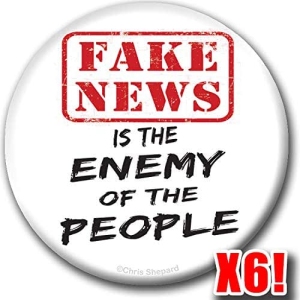
Donald Trump exposed the fake news mediaPolitical Animal – The animosity between Donald Trump and America’s first 24/7 fake news service is personal.

Now, Megyn Kelly has declared a winner in their feud.

And the truth bomb Megyn Kelly dropped has Democrats infuriated.

Megyn Kelly says corporate-controlled media has been messing with our heads for years.

She was recently invited on Joe Pagliarulo’s radio program where she revealed the most important thing Donald Trump accomplished when he became president: pulling back the curtain and exposing the incredible leftist bias of corporate-controlled media. Continue reading

NY Times Wants Free Speech Platform ‘Telegram’ Banned

TelegramNiamh Harris – The New York Times has vowed to do everything in its power to ban free-speech platform Telegram from the internet.

In response to the recent spate of attacks against Asians, the far-left newspaper claimed that memes shared on Telegram and 4chan were to blame.

Per the New York Times:

How Anti-Asian Activity Online Set the Stage for Real-World Violence

On platforms such as Telegram and 4chan, racist memes and posts about Asian-Americans have created fear and dehumanization. Continue reading