
 Charles Hugh Smith – Corruption isn’t just bribes and influence-peddling: it’s protecting the privileges of the few at the expense of the many. Rampant pollution is corruption writ large: the profits of the polluters are being protected at the expense of the millions being poisoned.
This is why capital and talent are fleeing China: systemic corruption has poisoned the nation and raised the cost of doing business. External costs such as environmental damage must be paid eventually, one way or the other.
Either the cost is paid in rising chronic illnesses, shorter lifespans and declining productivity, or profits and tax revenues must be siphoned off to clean up the damage and the sources of environmental degradation.
In large-scale industrial economies such as China and the U.S., that cost is measured not in billions of dollars but in hundreds of billions of dollars over a long period of time.
I have often noted that one key reason why the U.S. economy stagnated in the 1970s was the enormous external costs of runaway industrialization were finally paid in reduced profits and higher taxes.
China’s manufacturing base simply isn’t profitable enough to pay for the remedial clean-up and pollution controls needed to make China livable. That means labor and all the other sectors will have to pay the costs via higher taxes.
Pollution and environmental damage is driving away human capital, i.e. talent.This loss of talent is difficult to quantify, but it’s not just foreigners who have worked in China for years who are pulling up stakes to escape pollution and repression–talented young Chinese are finding jobs elsewhere for the same reasons.
The game-changer is automation, i.e. robots and software eating the world. To understand the impact on China, let’s start with unit labor costs, i.e. the cost of labor needed to produce each unit of output. Continue reading
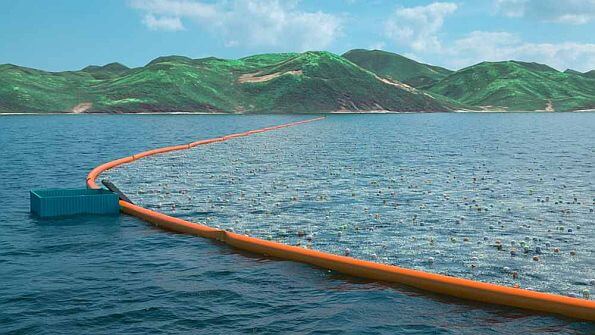 Slat’s invention consists of an anchored network of floating booms and processing platforms that could be dispatched to garbage patches around the world. Working with the flow of nature, his solution to the problematic shifting of trash is to have the array span the radius of a garbage patch, acting as a giant funnel as the ocean moves through it. The angle of the booms would force plastic in the direction of the platforms, where it would be separated from smaller forms, such as plankton, and be filtered and stored for recycling. The issue of by-catches, killing life forms in the procedure of cleaning trash, can be virtually eliminated by using booms instead of nets and it will result in a larger areas covered. Because of trash’s density compared to larger sea animals, the use of booms will allow creatures to swim under the booms unaffected, reducing wildlife death substantially.