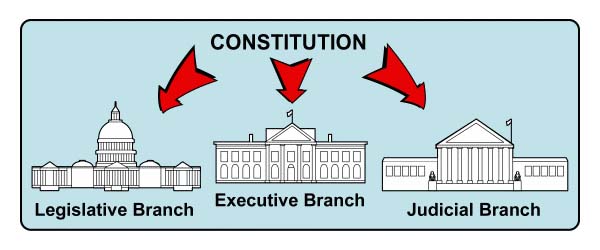
 Jonathan Turley – At 10 a.m. [May 28 2015] Judge Rosemary M. Collyer of the U.S. District Court for the District of Columbia will hear argument on the motion to dismiss filed by the defendants in U.S. House of Representatives v. Burwell, et al., No. 1:14-cv-01967 (D.D.C.). The defendants are the Departments of Health and Human Services and Treasury, and the secretaries of those two executive branch agencies. The Administration is seeking to prevent the Court from reaching the merits of this historic case, which was authorized by an affirmative vote of the entire House of Representatives on July 30, 2014, and which the House filed for the purpose of protecting our constitutional structure.
The House’s underlying complaint asserts two sets of claims, both of which concern the Affordable Care Act, and both of which allege that the defendants have violated the Constitution. These violations run to the very foundation of the separation of powers doctrine that underpins our entire system of government because they usurp Congress’s powers to appropriate public funds and to legislate. The first five counts concern defendants’ ongoing payment of billions of dollars to insurance companies. These payments were ordered by the Administration despite the fact that Congress, which has the exclusive constitutional power to appropriate public funds for expenditure, (i) rebuffed the Administration’s specific request for an annual appropriation of $4 billion in FY 2014, and (ii) has never at any other time appropriated any funds for such payments. (Such payments to insurance companies currently run at approximately $300 million per month, and are estimated by the Congressional Budget Office to total $175 billion over the next ten fiscal years.) Continue reading →

 Jonathan Turley – With a crucial defeat in federal court this week, one would expect the House Democrats to be embarrassed at losing long protected precedent supporting legislative authority. Instead, as a federal judge in Washington was rejecting their challenge to the executive order by President Trump to build a wall along the southern border, House leaders have nonetheless moved ahead with an assortment of other inadvisable gambles.
 Below is my column in