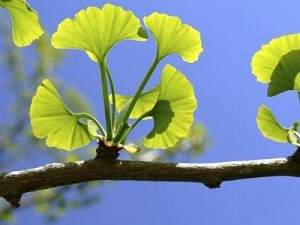
A study published in the Journal of Stroke and Cerebrovascular Disease confirms that extracts of one of the oldest plants in existence today, the ‘living fossil’ known as Gingko biloba, protects against stroke-related neurologic deficits in human subjects.[1]
Researchers at the University of Medical Sciences, Tabriz, Iran, lead a double-blind, placebo-controlled, randomized controlled trial, in order to assess the efficacy of Gingko biloba on functional outcome in patients with acute stroke. In order to measure functional outcome they used The National Institutes of Heath Stroke Scale (NIHSS), a 15-item neurologic examination stroke scale used to evaluate the effect of acute cerebral infarction on the levels of consciousness, language, neglect, visual-field loss, extraocular movement, motor strength, ataxia, dysarthria, and sensory loss.[2]
A total of 102 patients with acute ischemic stroke were studied. 52 patients received Ginko biloba and 50 patients placebo tablets, both for 4 months.[3] The primary outcome of treatment was a 50% reduction in the 4-month follow-up NIHSS score compared to the baseline NIHSS score, and was was reached in 17 patients (58.6%) and 5 patients (18.5%) in the Gingko biloba and placebo groups, respectively. When results were adjusted via multivariate regression for age and sex, there was observed a significant NIHSS decline in the Gingko biloba group compared to the placebo group.
The study authors concluded, “Our data suggest that G biloba may have protective effects in ischemic stroke. Therefore, the administration of G biloba is recommended after acute ischemic stroke.”
The researchers also pointed out that acute ischemic stroke is a major cerebrovascular disease with potential morbidity and mortality, and that despite the availability of thrombolytic therapy (blood thinners), risk factor modification and rehabilitation therapy are the mainstays of stroke management. Ginkgo biloba, they opined, could “afford neuroprotection and improve the outcomes of patients with acute ischemic stroke.”
Additional Research on Natural Stroke Preventive Strategies
On GreenMedInfo.com’s database we have indexed 20 natural substances which have been found to have value in stroke prevention, including:
[3] This trial was registered to the Iranian Registry of Clinical Trials (www.irct.ir; trial IRCT138804212150N1).
Sayer Ji
Sayer Ji is an author, educator, Steering Committee Member of the Global GMO-Free Coalition (GGFC), advisory board member of the National Health Federation, and the founder of GreenMedInfo.com – an open access, evidence-based resource supporting natural and integrative modalities. His writings have been published and referenced widely in print and online, including Truthout, Mercola.com, The Journal of Gluten Sensitivity, New York Times and The Well Being Journal. Visit GreenMedInfo online and on Facebook, or sign up for GreenMedInfo’s e-Newsletter.

 A study published in the Journal of Stroke and Cerebrovascular Disease confirms that extracts of one of the oldest plants in existence today, the ‘living fossil’ known as Gingko biloba, protects against stroke-related neurologic deficits in human subjects.[1]